Download NZs EWRB Electrical Certificate of Compliance
Download NZs EWRB electrical CoC PDF template
Or create, send and store digital certificates in minutes with TradeDocs.
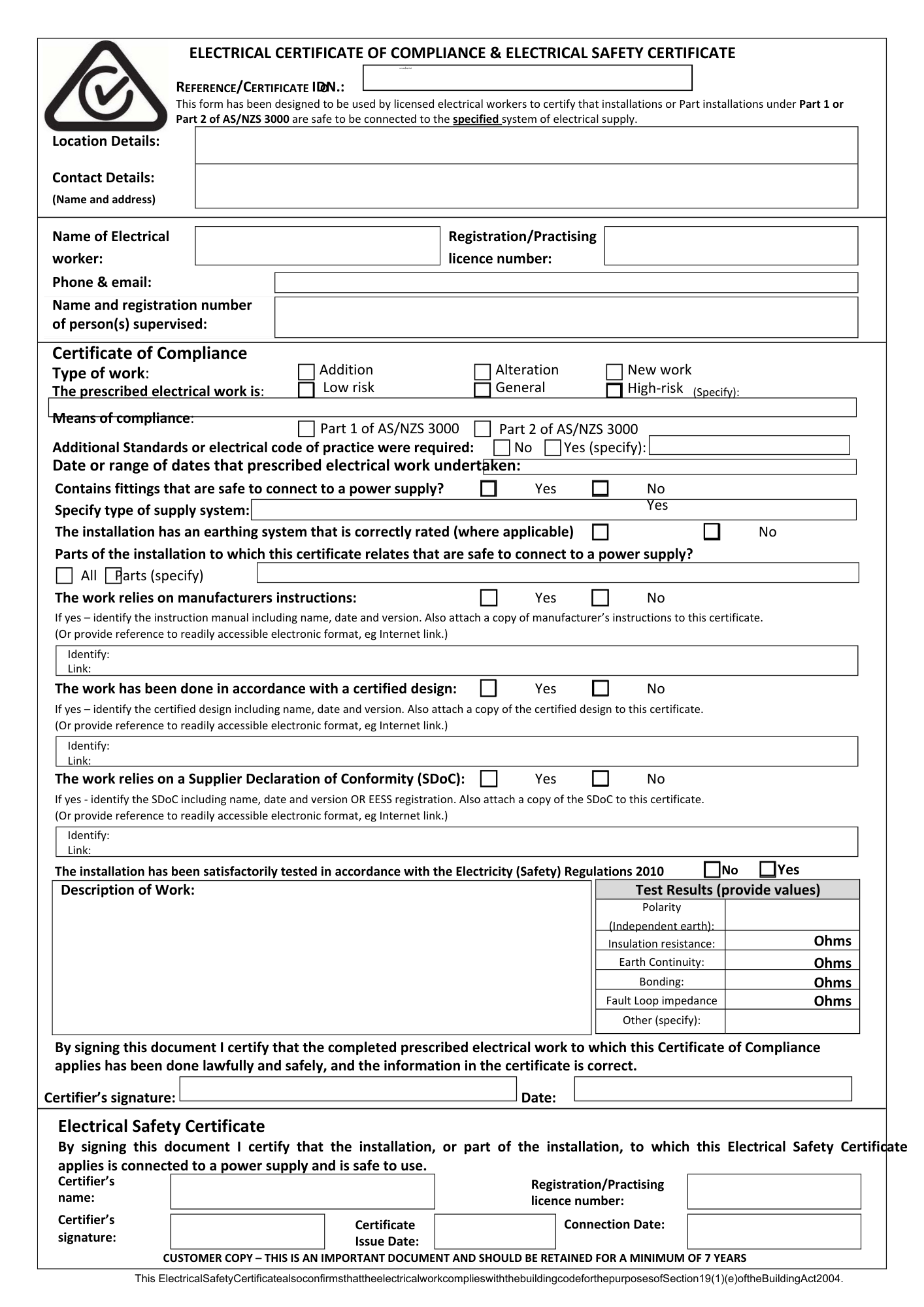
Download NZs EWRB electrical CoC PDF template
Or create, send and store digital certificates in minutes with TradeDocs.
.png)
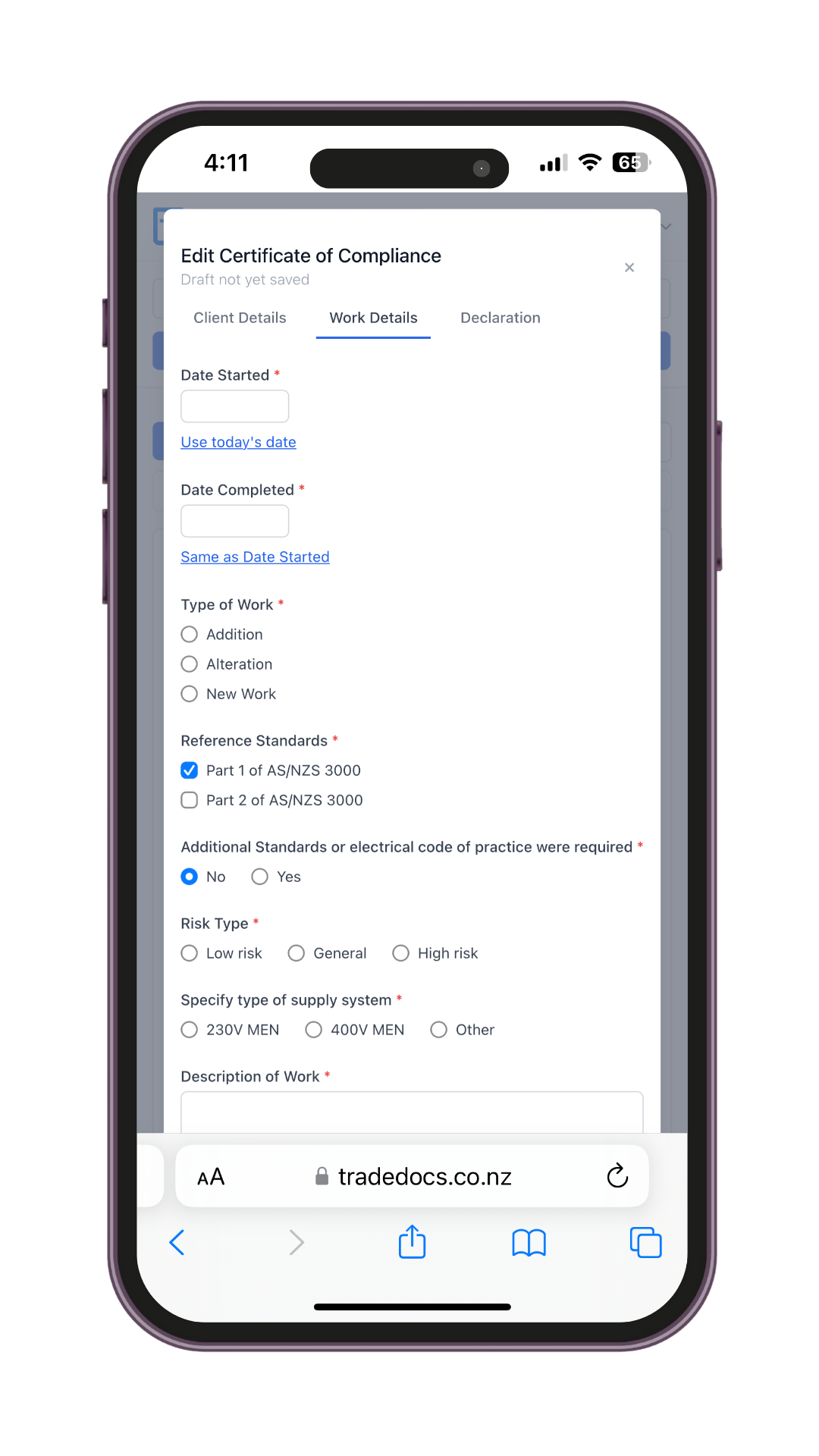
Pre-built, compliant templates
Auto-filled electrician details
Digital signatures & instant delivery
Secure storage & easy search
Many electricians still rely on paper pads or basic PDF templates to complete electrical CoCs. While familiar, this approach creates unnecessary admin and risk.
Common issues include:
An electrical certificate of compliance (CoC) is a formal document issued by a licensed electrical worker in New Zealand. It confirms that prescribed electrical work has been carried out in accordance with the Electricity (Safety) Regulations 2010, AS/NZS 3000 (Wiring Rules) and the standards set by the Electrical Workers Registration Board (EWRB).
Whenever medium-risk or high-risk prescribed electrical work is completed, the electrician must issue an electrical CoC to the customer and keep a copy themselves. This certificate becomes part of the legal record that the installation or alteration is compliant and safe.
Electricians in New Zealand must issue an electrical certificate of compliance for most prescribed electrical work that isn’t considered low-risk. If you’re unsure whether a CoC is needed, it’s safer to assume it is and check against current regulations.
You will typically need an electrical CoC when you:
Some low-risk prescribed electrical work does not require a CoC. Examples can include:
In these cases, an Electrical Safety Certificate (ESC) may still be required to confirm the installation is safe to use.
To be valid in New Zealand, an electrical certificate of compliance must contain specific information about the electrician, the work performed, and the standards it complies with.
A compliant electrical CoC must clearly identify the person responsible for the work, including:
The CoC must describe the work that has been carried out, including:
The certificate must confirm that the work:
In some cases, additional documentation should accompany the CoC, such as:
An electrical certificate of compliance isn’t just paperwork. It’s a critical part of electrical safety and legal protection in New Zealand.
Yes. It’s best practice to keep your electrical certificate of compliance for as long as the installation remains in place, and at least 7 years. It provides proof that the work was carried out in compliance with NZ regulations at the time.
No. Only a registered and licensed electrical worker can issue and sign an electrical certificate of compliance. Trainees may help complete the form, but the responsibility and signature sit with the licensed person.
Yes. Digital CoCs, including digital signatures, are acceptable as long as they contain all required information and are stored in a way that they can be produced if requested by regulators or inspectors.
No. Low-risk prescribed electrical work does not usually require a CoC, but it may still require an Electrical Safety Certificate (ESC). Medium-risk and high-risk prescribed work generally requires both a CoC and an ESC.
Electricians must keep a copy of each electrical certificate of compliance for a minimum of 7 years.