Download NZs EWRB Electrical Safety Certificate
Download NZs EWRB electrical ESC PDF template
Or create, send and store digital certificates in minutes with TradeDocs.
.png)
Download NZs EWRB electrical ESC PDF template
Or create, send and store digital certificates in minutes with TradeDocs.
.png)
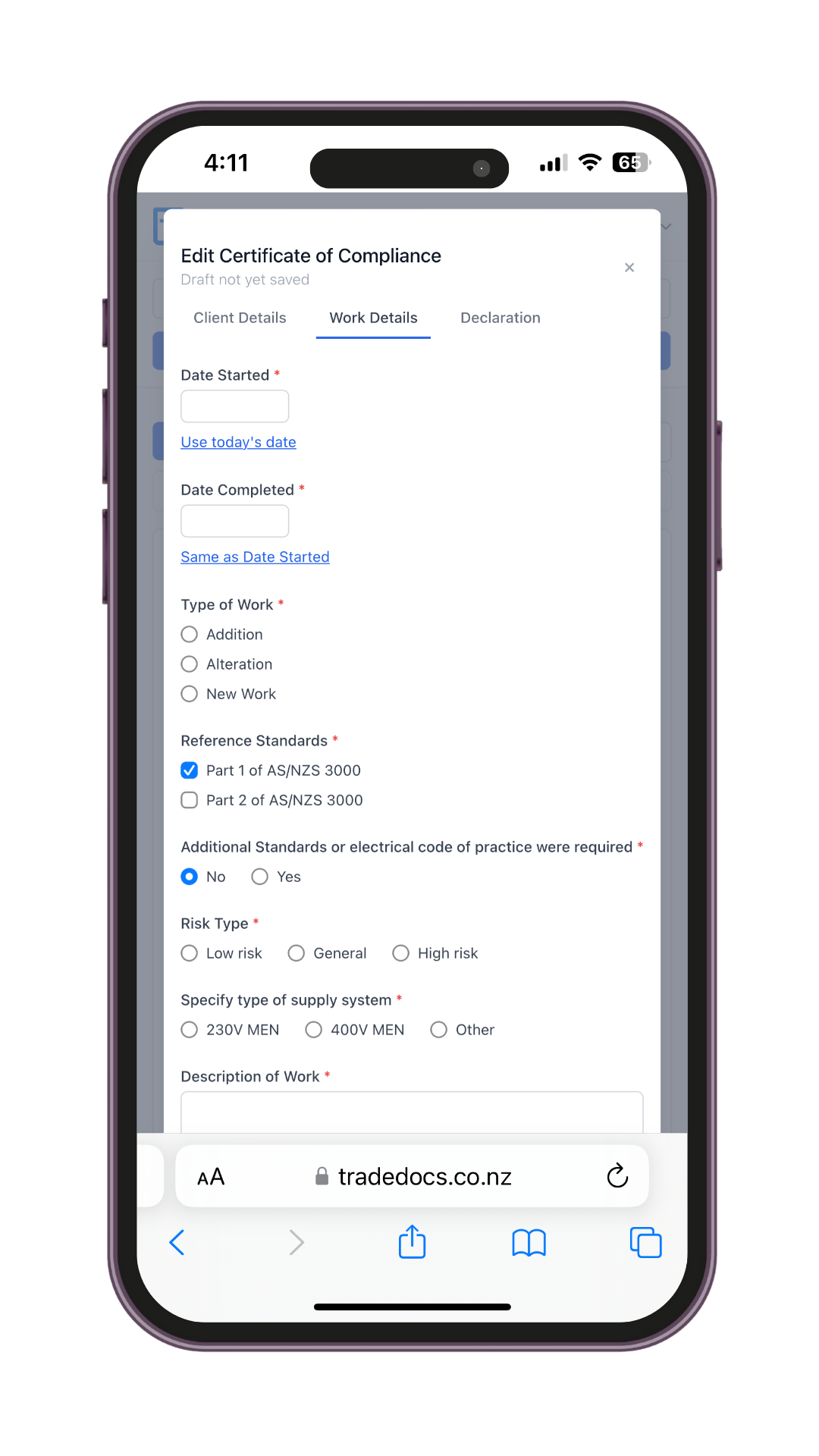
Pre-built, compliant templates
Auto-filled electrician details
Digital signatures & instant delivery
Secure storage & easy search
Many electricians still rely on paper pads or basic PDF templates to complete electrical CoCs. While familiar, this approach creates unnecessary admin and risk.
Common issues include:
An Electrical Safety Certificate (ESC) is a legal document that verifies prescribed electrical work (PEW) has been tested, is electrically safe, and connected to a power supply in a compliant manner.
Whereas a CoC confirms the design and installation of the work, the ESC confirms the work is safe to energise and use.
In New Zealand, issuing an ESC is a mandatory requirement under the Electricity (Safety) Regulations 2010, and every electrician or electrical worker completing PEW must issue one when the work is connected to the mains or energised.
You must issue an ESC whenever prescribed electrical work is completed and connected/energised, including but not limited to:
In short, A CoC is issued for the work. An ESC is issued for energising the work.
Both documents are required for compliance.
The exact contents of the ESC are defined by the Electricity (Safety) Regulations 2010 and the EWRB. An ESC must include the following key elements:
The CoC must describe the work that has been carried out, including:
The certificate must confirm that the work:
An electrical certificate of compliance isn’t just paperwork. It’s a critical part of electrical safety and legal protection in New Zealand.
No. Only prescribed electrical work that is connected to a power supply requires an ESC. Minor work that doesn’t involve energising typically does not.
Yes — for almost all PEW.
Yes. Digital ESCs are legally valid as long as all required information is included and digitally signed correctly.
Electricians and homeowners are required by law to keep a copy of each electrical safety certificate for a minimum of 7 years.
No. It is the electrician’s declaration — not a third-party assessment.
Yes, if the prescribed electrical work has been connected and energised.